
 Free Delivery on orders over £40*
 Give a friend 25% off their first order
 Highly rated by our customers
Modern Slavery Act
Campbells Prime Meat
Modern Slavery Statement
Introduction
This statement is issued by Campbell’s Prime Meat Limited (“Campbells”).
Campbells is a Scottish-based specialist supplier and distributor of fresh meat, fresh fish and deli products primarily to customers who prepare meals away from home. This includes restaurants, healthcare and educational facilities, lodging establishments, entertainment venues, and more. Campbells also operates a business to consumer website offering a range of fresh meat and fresh fish to consumers throughout the UK. Campbells employs over 300 colleagues in Scotland. Campbells became part of the Sysco GB group in October 2024. Campbells’ ultimate US parent company is Sysco Corporation, the global leader in foodservice.
Campbells is fully committed to ethical working practices, and regards inhumane conditions such as slavery, worker exploitation, and human trafficking as completely unacceptable either within its own business or in its supply chains.
Campbells has a zero-tolerance approach to modern slavery. Campbells recognises that modern slavery is a crime which can take many forms. Campbells strives to act ethically and with integrity in all of its business dealings and relationships, and to implement and enforce effective systems and controls to ensure modern slavery is not taking place in its own business or in its supply chains.
Suppliers to Campbells are required to complete a Supplier Questionnaire, to which they must attach details of their own compliance with the Modern Slavery Act 2015. All Campbells colleagues are required to adhere to the Campbells staff handbook, which sets out Campbells’ commitment to the principles of fairness and equity and to its whistleblowing policy.
Campbells is committed to ensuring there is transparency in its own business and in its approach to tackling modern slavery throughout Campbells’ supply chain, consistent with the disclosure obligations under the Modern Slavery Act 2015. The senior leadership team of Campbells fully supports the aims of the Act and is committed to combatting the risk of slavery and human trafficking in its business.
Senior leaders within Campbells’ HR and Procurement teams, supported by Sysco GB’s in-house Legal and Sustainability teams, have the primary responsibility for monitoring modern slavery risks in Campbells’ organisation and supply chain. These risks are reported to the Sysco GB Risk Committee, which meets quarterly and reports into the Sysco GB senior leadership team. As part of Campbells’ ongoing strategy to identify and mitigate the risk of modern slavery, Campbells has systems in place to:
- Identify and assess potential risk areas in Campbells’ workforce and supply chain;
- Monitor potential risk areas and mitigate the risk of slavery and human trafficking occurring;
- Encourage and enable reporting and speaking up, and protect whistle blowers;
- Investigate all concerns promptly and thoroughly, and take appropriate action.
Prevention of slavery and human trafficking in the Campbells workforce
Right to Work Checks
All colleagues employed by Campbells who work on a temporary, fixed term or permanent basis are subject to a right-to-work check in accordance with UK legislation. A person is unable to commence work for Campbells unless they first satisfy Campbells that they are legally able to work within the UK.
Whistleblowing Policy
Campbells has a whistleblowing policy in place, which encourages any colleague who has concerns about any aspect of Campbells or its supply chain to disclose their concerns, either through one of the regular reporting channels (to their line manager, to HR, to the Sysco GB Legal team or the Sysco Global Ethics and Compliance Team) or anonymously via a physical drop-off box at the premises. Any concerns are investigated thoroughly and retaliation is strictly prohibited.
Prevention of slavery and human trafficking in Campbells’ supply chain
Campbells’ Supply Chain
The majority of the products sold by Campbells are sourced from Scotland or the UK. Campbells may also source from other EU countries to support the range, quality, availability, and price requirements of Campbells’ customers.
Supplier adherence to Campbells’ values
In order to work with Campbells, all suppliers must complete a Supplier Questionnaire, which requires suppliers to confirm their compliance with the Modern Slavery Act 2015.
Campbells addresses any failure by a supplier to meet Campbells’ standards on a case-by-case basis and is committed to working with suppliers to improve in identified risk areas. Suppliers who fail to meet Campbells’ standard and/or fail to demonstrate an active commitment to improving ethical standards in their supply chain will jeopardise their ability to continue to work with Campbells.
Staff Handbook
All Campbells colleagues must sign the Campbells staff handbook upon joining, which sets out the organisation’s internal policies and its commitment to the principles of fairness and equity. The staff handbook is regularly reviewed and updated to ensure it supports Campbells in its compliance objectives.
Reporting on Campbells’ Progress
In the last 12 months:
- Campbells became part of the Sysco Group in October 2024. In the last 12 months, Campbells has had access to support and advice from the Sysco GB in-house Legal, Technical/QA, Procurement and Sustainability teams, as it transitions towards alignment with Sysco GB.
- Preparatory work and planning has been underway to enable Campbells to align with and benefit from Sysco’s compliance framework and tools during 2026, including the Sysco Global Code of Conduct, the Sysco Supplier Code of Conduct, new contractual terms and conditions for suppliers, the online Sysco “Workday” learning platform, and the Sysco Ethics Line.
- The Sysco GB Risk Committee was formed and consists of GB leaders across all functions, including Legal, Sustainability, Procurement, HR and Technical/QA. The Committee meet on a quarterly basis to discuss cross-functional risks which appear on individual risk registers; modern slavery and human rights is a key topic that sits cross-functionally across risk registers, which include the Campbells business. The Committee reports on its progress and plans to the senior leadership team of Sysco GB.
- During the last 12 months there have been no reports of slavery or human trafficking within the Campbells supply chain.
Further Steps
Campbells recognises that more can always be done to tackle Modern Slavery and, as a business, Campbells remains committed to increasing awareness of the issues and to a process of ongoing review of practices and policies to combat the risk of slavery and human trafficking. In the next 12 months Campbells intends to take the following steps to continue to further combat these risks:
- All Campbells colleagues will be required to sign up to the Sysco Global Code of Conduct, which sets out Sysco’s commitment to the principles of the UN Global Compact and the Universal Declaration of Human Rights. All Campbells colleagues will be required to complete mandatory Code of Conduct training on an annual basis. Networked colleagues will complete this online; non-networked colleagues will receive face-to-face training.
- Campbells colleagues will have access to the Sysco Ethics Line, an anonymous telephone or online whistle-blowing tool.
- Campbells will gain access to Sysco’s “Workday” learning platform and the Modern Slavery module housed there. Campbells will be able to monitor and follow up completion of the training by individual colleagues on Workday.
- Campbells will work with the Sysco GB Legal team to align supplier onboarding processes and terms with Sysco. All Campbells suppliers will sign up to Campbells new Terms and Conditions of Purchase, which require compliance with the Modern Slavery Act 2015 and which incorporate the Sysco Supplier Code of Conduct, which all Sysco suppliers are required to adhere to (https://sysco.com/Suppliers/Supplier-Partnerships/Supplier-Resources.html) and which sets out Sysco’s organisational values in relation to human rights.
- Sysco GB will provide additional targeted human rights training to all Campbells colleagues with responsibility for procurement and supplier relationships. This will take place in in March/April 2026 and will take the form of online workshops on human rights in food supply chains. This will be delivered by a third-party specialist provider and will cover: the business case for respecting human rights; the legal foundations; key risks and issues, including real life cases spanning modern slavery and child labour; what businesses should do to prevent and address risks; and how to react when human rights have been harmed. It will also cover how to talk to suppliers about the topic, and what Campbells colleagues can do in their day-to-day roles to make a difference. Campbells colleagues will either attend these sessions or will be able to access recordings of this training content online.
- Sysco GB’s Legal, Technical/QA, Sustainability and Procurement colleagues across the EU are preparing for the EU Forced Labour Regulation and the Corporate Sustainability Due Diligence Directive, and will be working to integrate the broader due diligence and internal process expectations into Campbells’ supplier onboarding, audit and risk assessment programmes, to ensure that Campbells is prepared for robust multi-jurisdictional compliance and keeps pace with evolving EU human rights standards.
- Campbells will be supported by the Sysco GB Legal team, as they work closely with the Global Ethics & Compliance and Investigations teams at Sysco Corporation, to ensure that Sysco GB and Campbells are sharing best practice and pooling knowledge on the risks of modern slavery in Campbells’ supply chain.
This statement is made pursuant to section 54(1) of the Modern Slavery Act 2015.
Signed:
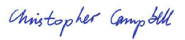
Christopher Campbell
Managing Director
Updated: March 2026
Issue No: 9