
 Free Delivery on orders over £40*
 Give a friend 25% off their first order
 Highly rated by our customers

- Recipes
- Beef Recipes
- How to make beef wellington
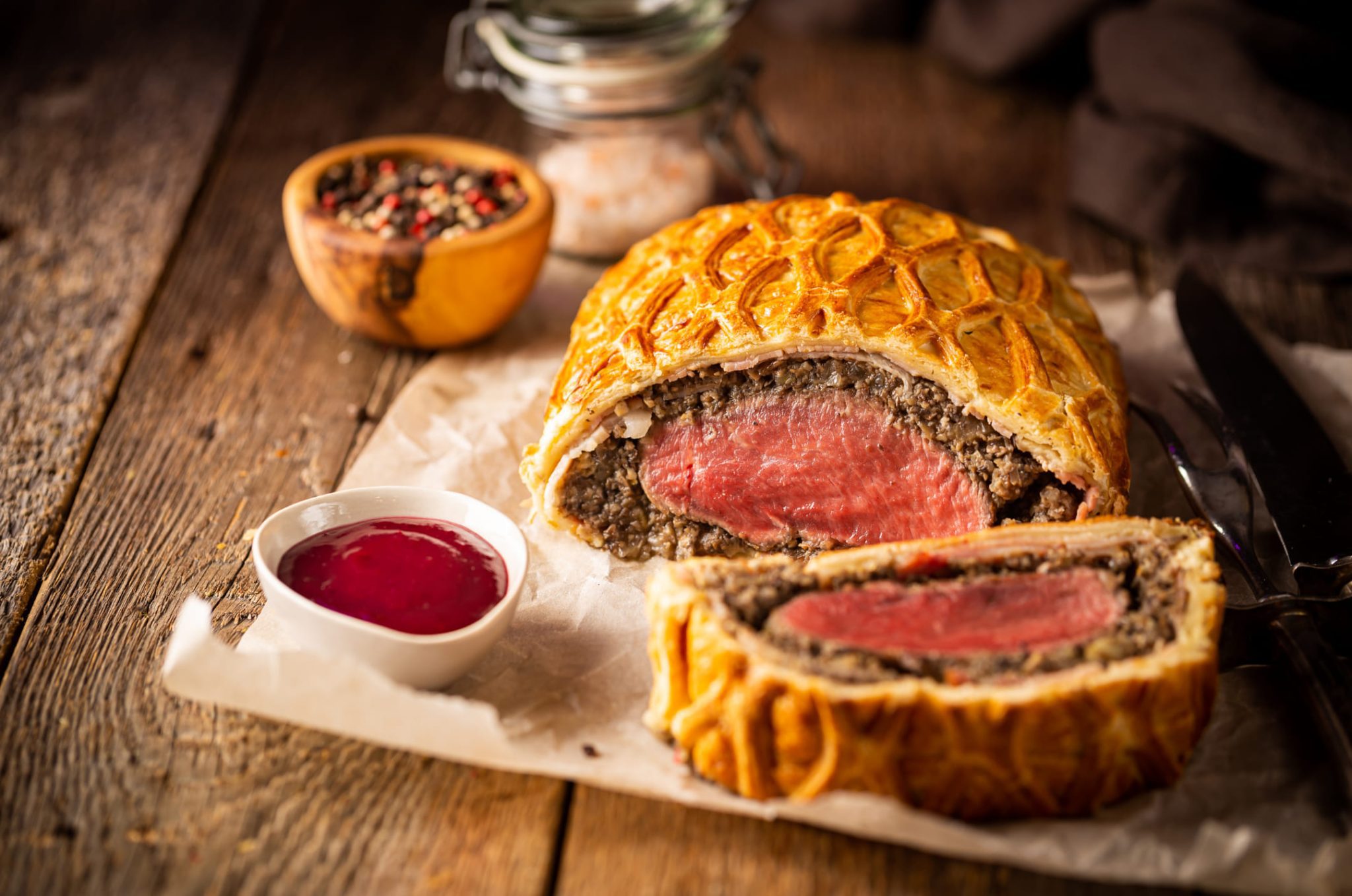

How to make beef wellington

Recipe by
Campbells
3 hours
Serves 4
- Recipes
- Beef Recipes
- How to make beef wellington

Ingredients
- 1kg beef fillet
- 300g chestnut mushrooms
- 1 pack puff pastry
- 1 pack prosciutto or Parma ham - 10 to 12 slices
- 50g butter
- 2 tsp olive oil
- 120ml white wine - dry
- 1 egg
- 1 sprig of thyme
- Seasoning
Method
Step 1
Remove your beef from the fridge and preheat your oven to 200°C
Step 2
Once the beef has reached room temperature, pat dry and rub with olive oil before seasoning - roast for 20 minutes
Step 3
Remove and cool. Once cool, cover and chill in the fridge for around 20 minutes
Step 4
Finely chop your mushrooms and cook with the butter on a medium heat in a frying pan - add a sprig of thyme and cook for 10 minutes, stirring frequently. Add the white wine and cook for a further 10 minutes
Step 5
Remove the thyme and set the mushrooms aside to cool
Step 6
Lay a piece of cling film on a chopping board. Lay out the prosciutto or Parma ham in two rows with the edges overlapping
Step 7
Spread half the mushrooms over the ham. Sit the fillet on top and cover in the remaining mushrooms
Step 8
Wrap the ham around the fillet using the cling film. Wrap and chill in the fridge for another 20 minutes
Step 9
On a lightly floured counter, lay or roll out your pastry. Unwrap the fillet and gently place on top
Step 10
Wrap the fillet in the pastry - ensure a tight seal. Press down if needed
Step 11
Brush the pastry with the beaten egg. Use a sharp knife to score the top of the wellington
Step 12
Chill for a further 30 minutes or up to 24 hours
Step 13
Brush again with egg and bake at 200°C in the oven. For rare, 20 minutes and 25 minutes for medium
Step 14
Rest for 15 minutes before serving
How long to cook beef wellington?
The beef wellington is typically cooked twice. For rare, aim for around 20 minutes each time and for medium, around 25 minutes each time. It’s not recommended to cook it for any longer, as the texture will be impacted.
What to serve with beef wellington?
Beef wellington is quite heavy, so it works best with lighter sides like spring greens like kale, green beans or even a simple side salad. If you’d like potatoes, Dauphinoise potatoes or a truffle mash are tasty options.
What is in beef wellington?
Beef wellington is a classic dish with English and French origins, thought to be named after Arthur Wellesley, the 1st Duke of Wellington. It combines beef fillet, Parma ham or prosciutto, mushrooms and/or pâté encased in puff pastry.
What internal temp for beef wellington?
For rare, remove from the oven at 43°C to 46°C. For medium-rare, remove at 46°C to 52°C. For medium, remove at 54°C to 57°C. Once removed, the temperature will continue to rise by several degrees to reach the final temperature.
What beef for beef wellington?
We’d recommend using a high-quality beef fillet like Chateaubriand or Scotch Beef Whole Fillet for the best flavour and melt-in-the-mouth texture.
Related recipes
-
Campbells
How to make suet pudding

- 0
- 1
- 2
- 3